Drying chart
Filament drying chart
The temperature and time to dry each filament, the most heat it can take, and how much moisture it soaks up, from manufacturers' data sheets.
- filaments charted
- 10
- hottest a dryer needs
- 80°C
- humidity to store at
- <20%


Drying temperature and time by filament
Typical values from Bambu Lab, Polymaker and Prusament guidance. The reel's own instructions win where they differ.
Filament dryers that reach 70°C, for TPU
Prices checked 5 Oct, 03:00 – 6 Oct, 03:20 (UK time) and may change.We earn a small commission if you buy. Your price stays the same.


PETG: dry at 65°C (cheapest in stock)
Prices checked 5 Oct, 23:20 – 6 Oct, 01:20 (UK time) and may change.We earn a small commission if you buy. Your price stays the same.
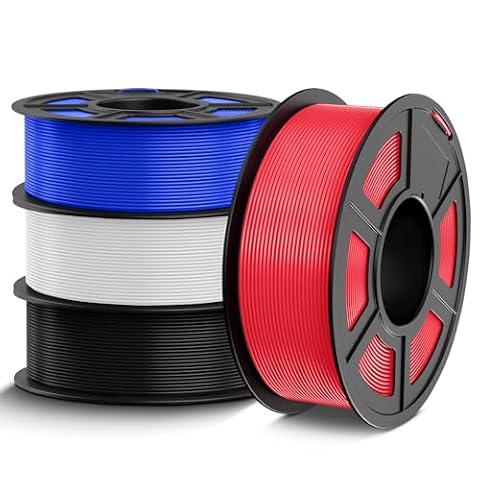


Nylon: dry at 80°C (cheapest in stock)
Prices checked 5 Oct, 03:00–23:45 (UK time) and may change.We earn a small commission if you buy. Your price stays the same.
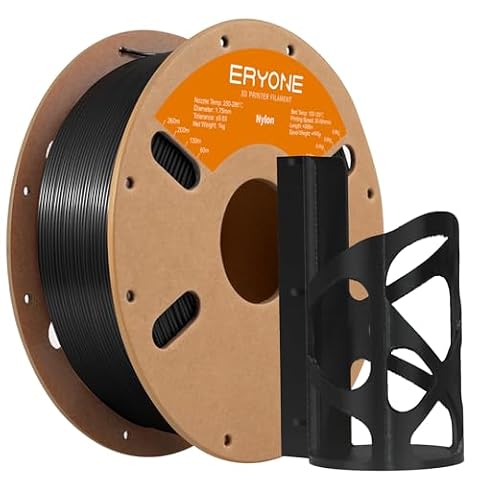


TPU: dry at 70°C (cheapest in stock)
Prices checked 5 Oct, 03:00 – 6 Oct, 03:00 (UK time) and may change.We earn a small commission if you buy. Your price stays the same.


Drying filament: what matters
Filament absorbs moisture from the air. Wet filament boils in the hotend, which shows up as stringing, popping or hissing, bubbles, rough or pitted surfaces and weak layers. Drying drives the water out at a temperature below the point where the plastic softens.
When choosing a dryer, check its maximum temperature against the chart. Some budget dryers stop at 55-70°C: fine for PLA, PETG and TPU, but not for nylon, which needs about 80°C. A dryer that can feed the printer while it runs helps with nylon and TPU, which take moisture back up within hours.
After drying, store reels sealed with desiccant, ideally below 20% relative humidity. A dry box with a hygrometer shows when the desiccant needs replacing.
Times and temperatures are typical values from Bambu Lab, Polymaker and Prusament guidance. The reel's own instructions win where they differ.
Common questions
What temperature should I dry PLA at?
50°C for about 6 hours, and no hotter than 55°C or the filament starts to soften and stick to itself on the spool. PLA absorbs moisture slowly; dry it when prints start stringing or popping.
What temperature should I dry PETG at?
65°C for about 6 hours, and no hotter than 70°C or the filament starts to soften and stick to itself on the spool. Dry PETG if it has been out for a few days or you see stringing.
What temperature should I dry ABS at?
80°C for about 6 hours, and no hotter than 85°C or the filament starts to soften and stick to itself on the spool. ABS absorbs moisture slowly; dry it when prints start stringing or popping.
What temperature should I dry ASA at?
80°C for about 6 hours, and no hotter than 85°C or the filament starts to soften and stick to itself on the spool. ASA absorbs moisture slowly; dry it when prints start stringing or popping.
What temperature should I dry Nylon at?
80°C for about 10 hours, and no hotter than 90°C or the filament starts to soften and stick to itself on the spool. Nylon soaks up moisture quickly, so dry it before every print and keep it sealed.
What temperature should I dry TPU at?
70°C for about 8 hours, and no hotter than 75°C or the filament starts to soften and stick to itself on the spool. TPU soaks up moisture quickly, so dry it before every print and keep it sealed.
What temperature should I dry PC at?
80°C for about 8 hours, and no hotter than 90°C or the filament starts to soften and stick to itself on the spool. Dry PC if it has been out for a few days or you see stringing.
Can I dry filament in a kitchen oven?
It's risky. Many ovens can't hold 45-65°C accurately and overshoot as they heat, which softens PLA and PETG and can fuse the reel. Plastic spools also soften around 80-90°C. A filament dryer or a food dehydrator holds a low temperature far more steadily.
How should I store filament?
Sealed, with desiccant, below about 20% relative humidity. In a typical room (around 50-60% humidity) freshly dried filament starts picking moisture up again within hours.
How SpoolDeal checks prices
The same rules on every page, so a deal badge means the same thing everywhere.
Re-checked through the day
Every tracked listing on Amazon UK and Eryone UK is re-checked through the day, and the most-watched ones every two hours.
Measured against our own history
A deal only counts when the price is below what that reel has actually sold for over the last 90 days, not a seller's “was” price.
An email when it drops
Set a target price on any reel with a free account and we email you when it gets there.
Compare
Waiting for a better price?
Open any reel and set the price you want to pay. We check it through the day and email you when it gets there. Free, and you can switch it off any time.